Qué es la gramática, no de qué consta
Gramática es la generación del pensamiento.(def-1)
Dicho de otro modo, es la gramática la que genera los pensamientos.
Suena sencillo, pero dice qué es la gramática, no de qué consta. Lo que pasa por definiciones de la gramática son en realidad descripciones, no definiciones.
Pensamientos son representaciones mentales, compuestas y simuladas de sucesos.(def-2)
La gramática genera pensamientos mediante seis conceptos fundamentales: partes del discurso, modos, diátesis, aspectos, cláusulas y sintaxis. Todo lo demás (morfología, vocabulario, puntuación, pronunciación, etc.) es paragramática.
Estos conceptos no son nuevos. La gramática como disciplina fue fundada por los griegos: por Sócrates (470–399 antes del año 1) en el Crátilo de Platón, que examina la exactitud de los nombres y distingue los sustantivos (ὀνόματα) de los verbos (ῥήματα); por Dionisio Tracio (c. 170–90 antes del año 1), cuyo Arte gramatical estableció las ocho partes del discurso; y por Apolonio Díscolo (siglo II después del año 1), que fundó el estudio de la sintaxis.
Cuando pensamos en algo, los seis conceptos se ponen en marcha. Ningún pensamiento es posible sin los seis.
El cerebro humano está hecho para generar pensamiento exactamente de la misma manera, sea cual sea la lengua. La gramática es, por tanto, un rasgo panhumano que nos une a todos de una manera muy especial, aunque inadvertida. La gramática es universal; la lengua no.
Comunicación es el intercambio de mensajes que transmiten significado.(def-3)
Todo mensaje que transmite significado transmite pensamiento, y ningún pensamiento existe sin gramática. Toda comunicación es, por tanto, gramatical.
Se suele decir que la lengua es lo que da voz a los pensamientos, pero eso es una metáfora, no una definición.
Lengua es comunicación paragramatical.(def-4)
Dicho de otro modo, la lengua es comunicación por medio de la paragramática. Toda comunicación es gramatical, pero solo la lengua es a la vez gramatical y paragramatical. La gramática es lo que todas las lenguas comparten con todo pensamiento; la paragramática es el ropaje que le da cada lengua.
Tomemos una oración sencilla: Nosotros compramos pescado esta mañana. Dígala en danés, griego, inglés o cualquier otra lengua, y las palabras cambian, las terminaciones cambian, el orden de las palabras puede cambiar. Pero la gramática no.
Partes del discurso
Nosotros es un pronombre, compramos es un verbo, pescado es un sustantivo, esta es un adjetivo y mañana es un sustantivo.
Muchas palabras pueden pertenecer a distintas partes del discurso en distintos contextos, pero en un contexto dado cada palabra pertenece a una sola. Tomadas una a una, sus equivalentes pertenecen a las mismas partes del discurso en todas las lenguas.
En español o en griego, nosotros puede expresarse (nosotros/as, εμείς) o dejarse a la terminación del verbo. En ambos casos, el pronombre está ahí. Solo cambia su marca, y eso es paragramática.
Modo
La oración enuncia un hecho. Está en modo indicativo, en todas las lenguas.
Diátesis
El sujeto realiza la acción: nosotros hicimos la compra. La oración es activa, en todas las lenguas.
Aspecto
La compra se ve como un solo acto completo. El aspecto es sinóptico, en todas las lenguas.
Cláusula
Es una cláusula principal enunciativa, en todas las lenguas.
Sintaxis
Nosotros es el sujeto, compramos es el verbo, pescado es el complemento directo y esta mañana es el adverbio, en todas las lenguas.
Seis conceptos, y ninguno de ellos cambia entre lenguas. Lo que varía de una lengua a otra es cómo cada lengua los marca: sus terminaciones, su orden de palabras, su ortografía, su pronunciación, etc. Eso es paragramática.
Primero, el pensamiento
Antes de que algo se diga o se escriba, existe como pensamiento. No encontramos primero las palabras para luego averiguar qué significan. Primero pensamos, y después buscamos las palabras. El pensamiento ya está completo en la mente, con los seis conceptos en su sitio, antes de que una lengua le dé forma.
La lengua viene después. Elige las palabras, las terminaciones y el orden de las palabras, y decide cuánto del pensamiento se dice en voz alta. Para entonces, la gramática ya ha hecho su trabajo. La gramática genera el pensamiento; la lengua lo comunica. Los dos ejemplos siguientes lo muestran.
Un segundo ejemplo
Tomemos otra oración: Los niños estaban jugando en el jardín.
Partes del discurso: los artículo, niños sustantivo, estaban verbo, jugando participio, en preposición, el artículo, jardín sustantivo.
Modo: indicativo.
Diátesis: activa.
Aspecto: progresivo. El juego se ve como algo en curso, no como un solo acto completo.
Cláusula: cláusula principal enunciativa.
Sintaxis: los niños sujeto, estaban jugando verbo, en el jardín adverbio.
Comparada con la primera oración, solo cambia el aspecto. Cambia un concepto, y el pensamiento cambia con él: una compra terminada se convierte en un juego en curso.
Lo que no se dice
Alguien pregunta: ¿Cuándo sales? Usted responde con una palabra: Mañana.
Se dice una sola palabra, y sin embargo el oyente entiende un pensamiento completo: [Yo salgo] mañana. Las palabras entre corchetes no se dicen. Están implícitas, y la gramática las aporta.
Partes del discurso: [yo] pronombre, [salgo] verbo, mañana adverbio.
Modo: indicativo.
Diátesis: activa.
Aspecto: progresivo.
Cláusula: cláusula principal enunciativa.
Sintaxis: [yo] sujeto, [salgo] verbo, mañana adverbio.
Los seis conceptos están en funcionamiento, aunque solo se dijo una palabra. Eso es lo que significa que la gramática genera el pensamiento: el pensamiento está completo antes de elegir una sola palabra. Cuánto de él decimos en voz alta es paragramática.
Las partes del discurso
Antes de enumerar las partes del discurso, definámoslas.
Las partes del discurso son categorías no semióticas de conceptos que interactúan y que aclaran la semántica del habla.(def-5)
No semióticas significa que las partes del discurso no tienen morfología; es decir, no tenemos en cuenta la morfología cuando tratamos las partes del discurso. Semántica significa significado.
De ello se sigue que la definición de cada parte del discurso debe respetarse estrictamente y sin excepción.
La parte del discurso a la que pertenece una palabra en una oración dada la determina únicamente la definición cuyos criterios esa palabra cumple realmente.
Cada parte del discurso tiene una definición concreta. Los criterios de las definiciones son exclusivamente semánticos, nunca morfológicos.
Hay diez partes del discurso, las mismas en todas las lenguas. Algunas lenguas, como el polaco y el chino, no tienen artículos, así que tienen nueve.
1. Sustantivos
2. Artículos
3. Pronombres
4. Adjetivos
5. Verbos
6. Participios
7. Adverbios
8. Preposiciones
9. Conjunciones
10. Interjecciones
Sustantivos son palabras que nombran entidades.(def-6)
Una entidad es todo lo que podemos nombrar: una persona, una cosa, un lugar, una idea. Pescado, Madrid, maestro y justicia son sustantivos, porque cada uno nombra una entidad.
Decide la definición, no la forma. En Nadar es sano, la palabra nadar tiene forma de verbo, pero aquí nombra una actividad como entidad. Cumple la definición de sustantivo, así que es un sustantivo.
Artículos son las palabras que determinan la selectividad de los sustantivos.(def-7)
Compare Compré un pescado con Compré el pescado. Con un, el pescado no está seleccionado: es un pescado cualquiera. Con el, el pescado está seleccionado: es un pescado concreto que conocen tanto el hablante como el oyente. El sustantivo es el mismo; el artículo determina cuán selectivo es.
Pronombres son palabras que se usan en lugar de sustantivos.(def-8)
En María compró un pescado. Ella lo cocinó., la palabra ella está en lugar de María, y lo está en lugar de pescado. En nuestra primera oración, nosotros está en lugar de los nombres de quienes compraron el pescado.
Adjetivos son palabras o grupos de palabras que califican a los sustantivos.(def-9)
En pescado fresco, la palabra fresco califica al sustantivo pescado, así que es un adjetivo. En nuestra primera oración, esta califica a mañana, así que también es un adjetivo.
Un adjetivo también puede ser un grupo de palabras. En pescado del mercado, el grupo del mercado califica a pescado. Según la definición, es un adjetivo.
Verbos son palabras que toman un sujeto.(def-10)
Sujetos concretan el significado de los verbos.(def-11)
Por sí solo, comprar es solo un significado: un acto de compra, de nadie en particular. En Nosotros compramos pescado, el sujeto nosotros concreta ese significado: la compra se convierte en un acto que alguien realizó de verdad.
Participios son derivados de verbos que introducen cláusulas elípticas recuperables.(def-12)
Un participio representa una cláusula entera que se ha abreviado. La cláusula siempre se puede recuperar:
Habiendo terminado el trabajo, se fue a casa. = Como había terminado el trabajo, se fue a casa.
Una vez mencionado, el nombre se hizo viral. = Después de que se mencionara el nombre, se hizo viral.
En ambos casos, la cláusula elíptica se ha recuperado, y el significado no cambia.
Adverbios son palabras o grupos de palabras que califican a verbos, adjetivos, otros adverbios y también a cláusulas, en cuanto a tiempo, lugar, modo, frecuencia, grado, actitud o percepción.(def-13)
Los adverbios responden a las preguntas ¿dónde?, ¿cómo?, ¿cuándo? y ¿cuánto? La última puede ampliarse: ¿con qué frecuencia? ¿a qué altura? ¿con qué seguridad? ¿cuánto mejor? Un adverbio puede incluso ser una respuesta por sí solo.
1. María canta maravillosamente. El adverbio maravillosamente califica al verbo canta. ¿Cómo canta María? ¡Maravillosamente! Es un adverbio de modo.
2. Algunas personas son increíblemente ingenuas. El adverbio increíblemente califica al adjetivo ingenuas. Es un adverbio de grado: indica cuán ingenuas.
3. Vamos a nadar muy temprano. El adverbio muy califica al adverbio temprano. Muy es un adverbio de grado; temprano es un adverbio de tiempo.
4. Quizás no te creen. El adverbio quizás califica a toda la cláusula no te creen. Expresa probabilidad.
Preposiciones son palabras o grupos de palabras que toman sustantivos o sintagmas nominales como objetos y expresan lugar, tiempo, dirección, causa, modo, etc.(def-14)
No hay preposición sin objeto.
1. Les di los libros a ellos. La preposición a toma el objeto ellos, un pronombre en lugar de un sustantivo, y expresa dirección.
2. Las llaves están en mi bolsillo. La preposición en toma el sintagma nominal mi bolsillo y expresa lugar.
3. Estudié el problema en profundidad. La preposición en toma el sustantivo profundidad y expresa modo.
Sintagmas nominales son sintagmas que contienen sustantivos o pronombres y pueden funcionar como sujetos, objetos o atributos.(def-15)
1. drama → sustantivo; mucho drama → sintagma nominal. Si una película tiene mucho drama, suele ser agotadora. Mucho drama es el complemento directo del verbo tiene.
2. historia → sustantivo; una larga historia → sintagma nominal. Su vida es una larga historia. Una larga historia es el atributo del verbo es.
3. momentos → sustantivo; los momentos difíciles → sintagma nominal. Los momentos difíciles forjan el carácter. Los momentos difíciles es el sujeto del verbo forjan.
Conjunciones son palabras o grupos de palabras que establecen una relación de subordinación, es decir, de interdependencia, entre cláusulas.(def-16)
Todas las conjunciones son hipotácticas. La idea de que algunas conjunciones son paratácticas es infundada y se tratará a su debido tiempo.
Los libros de gramática convencionales dividen las conjunciones en dos categorías: coordinantes y subordinantes. Pero ¿por qué se hace esta división, y qué aporta a la comprensión de la gramática?
Las conjunciones se dividen así porque los llamados gramáticos no han comprendido que, con la excepción de las cláusulas condicionales, si quitamos la conjunción de cualquier cláusula subordinada, esta se convierte automáticamente en principal. Y esto no ocurre solo con las conjunciones «coordinantes», sino con todas las conjunciones.
1. Me quedé en casa porque llovía. Sin porque: Llovía. Una cláusula principal.
2. Me quedé en casa, pero ella salió. Sin pero: Ella salió. Una cláusula principal.
Por regla general, lo que hace subordinada a una cláusula es la presencia de una conjunción. Sin embargo, la historia no termina aquí. Como veremos, incluso cláusulas sin ninguna conjunción son a veces subordinadas, porque así lo exige la propia semántica.
Los autores nominales de libros de gramática simplemente copian otros libros de gramática y pegan la copia en un libro «nuevo», cambiando solo algunos detalles superficiales para guardar las apariencias. Huelga decir que lo único que esta división de las conjunciones aporta a la gramática es una confusión abundante y generalizada.
También es muy importante señalar que las definiciones de los conceptos en estos libros, cuando se dan, no cumplen los requisitos de la horística. Además, los «autores» de estos libros violan una y otra vez las mismas definiciones que supuestamente formularon ellos mismos. La verdad es que simplemente copian de otros libros la definición que les llama la atención.
Interjecciones son palabras o grupos de palabras que expresan emoción y no tienen ninguna función sintáctica.(def-17)
Por emoción entendemos también la voluntad (¡chis! en el sentido de silencio, ¡vamos!), la vacilación (hm, eh) y la convención social (hola, gracias), cuando estas palabras se usan como exclamaciones.
1. ¡Uf, por fin se acabó! La palabra uf no tiene ninguna función sintáctica: no es sujeto, atributo, objeto ni nada más. Esto vale para todas las interjecciones.
2. ¡Ay, cuánto echo de menos a mi madre!
3. ¡Huy, qué me ha pasado!
4. ¡Bravo, lo hiciste perfecto!
Un puñado de palabras no encaja en ninguna de las definiciones de las diez partes del discurso. Las llamamos partículas.
En la próxima edición: los modos, en detalle.
La ley frente a la pena por infringir la ley
Hacer cumplir la pena por infringir la ley no es la ley misma.
¿Qué es la justicia? Definámosla:
Justicia es la prevención del delito.
Una vez cometido un delito, ya no puede hacerse justicia, porque la justicia es prevenir el delito. Lo que sigue —la detención, el juicio, la prisión— tiene que ver con la pena por infringir la ley, que no es justicia. Así que lo que se llama aplicación de la ley es en realidad aplicación de la pena.
Esto dice mucho sobre el poder revelador de las definiciones, y lo que revela está en el centro de un sinfín de malentendidos que descarrilan millones de vidas.
Piense en la frase que oímos en las noticias cada semana: el delincuente «fue llevado ante la justicia». No lo fue. Fue llevado ante la pena. La justicia que podría haberse hecho era la prevención de su delito, y ese momento pasó antes de que el delito se cometiera. Lo que queda después es una consecuencia, no un remedio.
Piense en la víctima. Le decimos a la víctima que se hará justicia, que el veredicto traerá justicia. Pero el daño ya está hecho, y ninguna sentencia lo deshace. A la víctima se le promete una cosa y se le da otra. Muchos esperan años un juicio con la esperanza de un alivio, y cuando llega la sentencia se sienten extrañamente vacíos. No se equivocaban al sentirlo. Les dieron la palabra equivocada.
La justicia se confunde con el castigo, con la venganza, con la indemnización económica y con lo legal. No es nada de eso. El castigo es la pena impuesta después del delito. La venganza es daño devuelto por daño. La indemnización es dinero pagado por un daño ya hecho. Lo legal es lo que la ley permite o prohíbe, y no es raro que lo legal sea injusto y que lo justo sea ilegal. Los opioides se comercializaron y recetaron legalmente a escala masiva, y siguió una epidemia de adicción. En muchos países se castiga a las personas por expresarse libremente. Los cuatro llegan después del delito o están a su lado. Ninguno lo previene, y por eso ninguno es justicia.
Piense en el político. Cuando los políticos prometen mano dura contra el delito, casi siempre quieren decir mano dura con la pena: condenas más largas, más prisiones, más policía después de los hechos. Cada una de estas medidas actúa solo después de cometido el delito. Según la definición, ninguna es justicia. Un gobierno que dedica la mayor parte de su esfuerzo a las penas no es un gobierno que hace justicia. Es un gobierno que administra el fracaso de la justicia.
Si la justicia es la prevención del delito, entonces la justicia significa eliminar las razones que llevan a alguien a cometer un delito, de modo que los ciudadanos no tengan motivo alguno para cometerlos. Detrás de cada delito hay una razón, ya sea la necesidad, la ignorancia, la exclusión o la desesperación. Elimine la razón, y el delito no tiene de dónde crecer.
Ese es ante todo el deber de la política, tal como se define correctamente. No de los tribunales, que llegan demasiado tarde. No de la policía, que llega después de la llamada. No de las prisiones, que albergan las consecuencias de un fracaso que ya ha ocurrido. La política es la única institución situada antes del delito, allí donde se forman sus razones, y por eso es la única que puede hacer justicia.
Una sola definición, formulada con precisión, traslada la justicia de la sala del tribunal al aula, de la prisión al hogar, del final de la historia a su comienzo. Ese es el poder revelador de las definiciones. Una sociedad que confunde la pena con la justicia seguirá construyendo prisiones y preguntándose por qué el delito no desaparece. Una sociedad que define correctamente la justicia se hará otra pregunta: no cómo castigar, sino cómo prevenir.
El uso de armas nucleares ya no es impensable
Theodor Herzl fue el visionario del Gran Israel
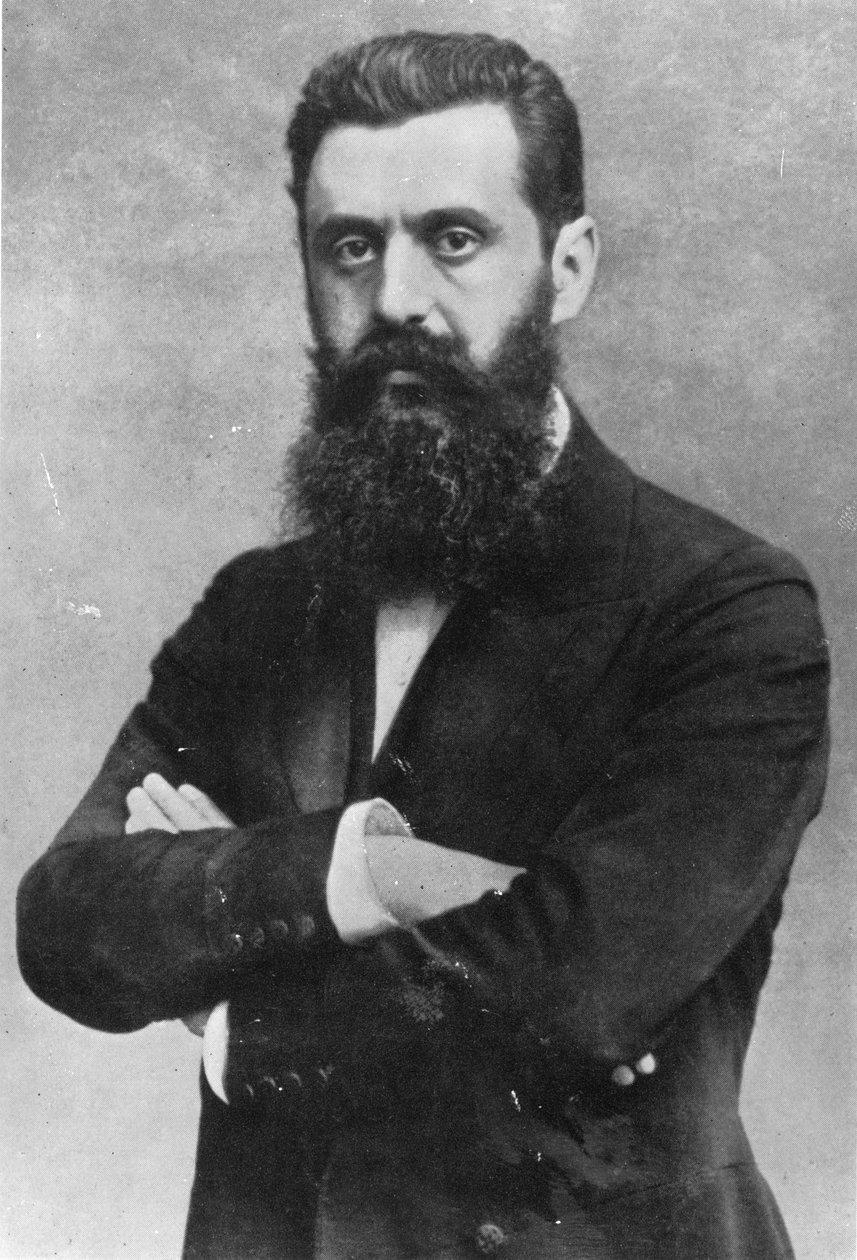
Theodor Herzl (1860–1904) fue un periodista, escritor y activista político judío austrohúngaro que se convirtió en el fundador central del sionismo político moderno.
Nacimiento: Budapest, 2 de mayo de 1860
Muerte: Edlach, Austria, 3 de julio de 1904 (enterrado en Viena)
Profesión: periodista, dramaturgo, escritor
Obra principal: Der Judenstaat (El Estado judío), 1896
Papel político: organizó el Primer Congreso Sionista en Basilea en 1897 y fue presidente de la recién creada Organización Sionista.
Objetivo: una patria para el pueblo judío asegurada pública y jurídicamente.
Buscó apoyo diplomático internacional para este proyecto, incluidas negociaciones con el Imperio otomano y el gobierno británico.
Herzl murió décadas antes de la fundación del Estado de Israel en 1948, por lo que no participó en la creación del propio Estado. Sus escritos y su organización política se convirtieron, sin embargo, en la base del movimiento sionista.
Para marcar el tono, volvamos a Londres en octubre de 1902. El 23 de octubre, según su propio diario, Herzl entró en el despacho de Joseph Chamberlain, secretario de Colonias británico, a las doce y cuarto. Llegó con una petición: un territorio bajo control británico para la colonización judía. Nombró tres lugares: Chipre, El-Arish y la península del Sinaí.
No existe transcripción de la reunión. Lo que se conserva es el relato del propio Herzl, escrito en su diario al día siguiente. Es la fuente primaria, y es reveladora precisamente porque es suya.
Herzl explicó por qué no podía simplemente esperar el resultado de sus negociaciones con el sultán otomano, que gobernaba Palestina. Las comparó con la compra de una alfombra: «Si quieres comprar una alfombra, primero tienes que beber media docena de tazas de café y fumar cien cigarrillos; luego hablas de historias familiares, y de vez en cuando vuelves a decir unas palabras sobre la alfombra. Yo tengo tiempo para negociar, pero mi pueblo no. Pasa hambre en la Zona de Asentamiento. Debo llevarle ayuda inmediata».
Chamberlain respondió que solo podía hablar con autoridad sobre Chipre, porque El-Arish y el Sinaí dependían del Ministerio de Asuntos Exteriores. Sobre Chipre, Herzl recoge su respuesta:
«Chipre está habitada por griegos y musulmanes. No podría desplazarlos en favor de nuevos inmigrantes. Al contrario, mi deber sería ponerme de su lado».
Chamberlain añadió entonces que, si Herzl podía señalar un lugar en las posesiones británicas donde no hubiera habitantes blancos, estaría dispuesto a discutirlo.
Herzl no soltó Chipre. Propuso crear una corriente favorable al asentamiento judío en la isla, impulsada por capital judío. En sus propias palabras:
«Una vez que fundemos la Compañía Judía de Oriente, con 5 millones de libras de capital, para asentar el Sinaí y El-Arish, los chipriotas empezarán a querer también esa lluvia de oro en su isla. Los musulmanes se marcharán, los griegos venderán con gusto sus tierras a buen precio y emigrarán a Atenas o a Creta».
Y Herzl anota de inmediato la reacción de Chamberlain: «Pareció acoger bien la idea».
El orden importa. Chamberlain se negó a desplazar a los griegos y musulmanes de Chipre. Herzl respondió con un plan según el cual se irían por sí mismos: los musulmanes se marcharían, los griegos venderían y emigrarían. Y, según el relato de Herzl, Chamberlain pareció acogerlo bien. No es una interpretación posterior de la posición de Herzl. Está en su propio diario, escrito durante sus negociaciones en Londres en octubre de 1902.
Al día siguiente, Chamberlain organizó una reunión de Herzl con el ministro de Asuntos Exteriores, lord Lansdowne. Pero le dijo que dejara Chipre fuera de esa reunión: «La parte del plan relativa a Chipre es asunto mío».
La opción de Chipre se cerró ahí. Gran Bretaña estudió El-Arish, pero ese plan fracasó por la postura del gobierno egipcio y la falta de agua. En 1903, Chamberlain ofreció algo completamente distinto: un territorio en el África Oriental Británica, el llamado Plan Uganda.
Muchos sostienen que se permitió que ocurriera el ataque del 7 de octubre de 2023 para que el gobierno de Netanyahu pudiera usarlo para justificar el desplazamiento de los palestinos de Gaza. Esto recuerda un aspecto del pensamiento de Theodor Herzl: al hablar de Chipre con Joseph Chamberlain en 1902, Herzl imaginaba la salida de la población musulmana y la venta de tierras y la emigración de la población griega a Atenas o a Creta.
Israel aplica ahora una política dirigida a cambiar el régimen iraní. Sin embargo, dados el tamaño, la población, la geografía, la capacidad militar y la demostrada resistencia de Irán, no es en absoluto seguro que Irán capitulara solo mediante operaciones militares convencionales. El conflicto ya ha demostrado la capacidad de Irán para absorber una presión militar considerable sin dejar de responder.
Aun así, ni Israel ni Estados Unidos pueden abandonar fácilmente el objetivo. Ambos han invertido mucho en el cambio de régimen, y renunciar a él supondría una grave pérdida de prestigio y un duro golpe psicológico para ambos.
Mientras tanto, hay informes de una creciente implicación israelí en Chipre, incluidas inversiones israelíes y cooperación en materia de seguridad. Si el gobierno israelí llega a la conclusión de que la presión militar no producirá un cambio de régimen en Irán, surge una pregunta peligrosa: ¿escalaría hasta el uso de armas nucleares tácticas? Un paso así no garantizaría necesariamente el colapso del Estado iraní y podría, en cambio, provocar una escalada incontrolable.
Las consecuencias podrían ir mucho más allá de Oriente Próximo. Un ataque nuclear de Israel podría presionar a otras potencias nucleares, entre ellas Rusia y China, para que intervinieran o respondieran militarmente. No se puede predecir si realmente usarían armas nucleares, pero la mera posibilidad haría de tal escalada una amenaza para toda la comunidad internacional.
La amenaza de Donald Trump en la Asamblea General de la ONU el 22 de septiembre de 2026, cuando preguntó si debía «aniquilar la República Islámica» si no se alcanzaba un acuerdo de paz, demuestra hasta qué punto se ha vuelto extrema la retórica actual. La posibilidad de una nueva escalada no concierne, por tanto, solo a Israel, a Irán o a Oriente Próximo, sino potencialmente a toda la humanidad.
Suscripción
Se publica cada mes en español, danés, polaco y griego, cada edición junto con la inglesa. Disponible impresa y en PDF.
Escuelas
1.995 DKK (268 €) al año por escuela. Incluye la edición en PDF en todas las lenguas, que la escuela puede copiar para sus propios alumnos y profesores.
Empresas y organizaciones
1.495 DKK (200 €) al año. Incluye la edición en PDF para un máximo de 10 lectores. Grupos mayores, a consultar.
Particulares
Impresa: 799 DKK (107 €) al año. PDF: 399 DKK (54 €) al año. Ejemplar suelto: 20 DKK (2,70 €).
Clases de gramática
Clases de gramática individuales y en grupo, en inglés, griego y español. Consultas: mind@horistics.com.
Contacto
Para suscribirse, escriba a mind@horistics.com indicando su nombre, su dirección y la edición que desea. Pago por MobilePay 27 13 44 83.
HORISTICS
What grammar is — not what it consists of
Grammar is the generation of thought.(def-1)
In other words, it is grammar that generates thoughts.
That sounds simple, but it says what grammar is, not what it consists of. What pass for definitions of grammar are really descriptions, not definitions.
Thoughts are mental, composite, simulated representations of occurrences.(def-2)
Grammar generates thoughts through six fundamental concepts: parts of speech, moods, diatheses, aspects, clauses and syntax. Everything else (morphology, vocabulary, punctuation, pronunciation and so on) is paragrammar.
These concepts are not new. Grammar as a discipline was founded by the Greeks: by Socrates (470–399 Before Year 1, BY1) in Plato's Cratylus, who examines the correctness of names and distinguishes nouns (ὀνόματα) from verbs (ῥήματα); by Dionysius Thrax (c. 170–90 BY1), whose Art of Grammar set out the eight parts of speech; and by Apollonius Dyscolus (2nd century After Year 1, AY1), who founded the study of syntax.
When we think of something, all six concepts are set in motion. No thought is possible without all six.
The human brain is wired to generate thought in exactly the same way, regardless of language. Grammar is therefore a panhuman trait that unites us all in a very special but overlooked way. Grammar is universal; language is not.
Communication is the exchange of messages that carry meaning.(def-3)
Every message that carries meaning carries thought, and no thought exists without grammar. All communication is therefore grammatical.
Language is often said to be what gives thoughts a voice, but that is a metaphor, not a definition.
Language is paragrammatical communication.(def-4)
In other words, language is communication via paragrammar. All communication is grammatical, but only language is both grammatical and paragrammatical. Grammar is what all languages share with all thought; paragrammar is how each language dresses it.
Take one simple sentence: We bought fish this morning. Say it in Danish, Greek, Spanish or any other language, and the words change, the endings change, the word order may change. But the grammar does not.
Parts of speech
We is a pronoun, bought is a verb, fish is a noun, this is an adjective and morning is a noun.
Many words can belong to different parts of speech in different contexts, but in a given context each word belongs to only one. Taken one by one, their equivalents belong to the same parts of speech in every language.
In Greek or Spanish, we can be stated (εμείς, nosotros/as) or left to the verb ending. Either way, the pronoun is there. Only its marking differs, and that is paragrammar.
Mood
The sentence states a fact. It is in the indicative mood, in all languages.
Diathesis
The subject performs the action: we did the buying. The sentence is active, in all languages.
Aspect
The buying is seen as one complete act. The aspect is synoptic, in all languages.
Clause
It is a declarative main clause, in all languages.
Syntax
We is the subject, bought is the verb, fish is the direct object and this morning is the adverb, in all languages.
Six concepts, and not one of them changes across languages. What varies from language to language is how each language marks them: its endings, its word order, its spelling, its pronunciation and so on. That is paragrammar.
Thought comes first
Before anything is said or written, it exists as a thought. We do not first find the words and then work out what they mean. We think first, and then we look for the words. The thought is already complete in the mind, with all six concepts in place, before any language gives it form.
Language comes after. It chooses the words, the endings and the word order, and decides how much of the thought is said aloud. By then, grammar has already done its work. Grammar generates the thought; language communicates it. The next two examples show this.
A second example
Take another sentence: The children were playing in the garden.
Parts of speech: the article, children noun, were verb, playing participle, in preposition, the article, garden noun.
Mood: indicative.
Diathesis: active.
Aspect: progressive. The playing is seen as ongoing, not as one complete act.
Clause: declarative main clause.
Syntax: the children subject, were playing verb, in the garden adverb.
Compared with the first sentence, only the aspect differs. One concept changes, and the thought changes with it: a completed purchase becomes an ongoing game.
What is not said
Someone asks: When are you leaving? You answer with one word: Tomorrow.
One word is spoken, yet the listener understands a complete thought: [I am leaving] tomorrow. The words in brackets are not said. They are implied, and grammar supplies them.
Parts of speech: [I] pronoun, [am] verb, [leaving] participle, tomorrow adverb.
Mood: indicative.
Diathesis: active.
Aspect: progressive.
Clause: declarative main clause.
Syntax: [I] subject, [am leaving] verb, tomorrow adverb.
All six concepts are at work, although only one word was spoken. That is what it means for grammar to generate thought: the thought is complete before a single word is chosen. How much of it we say aloud is paragrammar.
The parts of speech
Before we list the parts of speech, let us define them.
The parts of speech are non-semiotic categories of interacting concepts that clarify the semantics of speech.(def-5)
Non-semiotic means that the parts of speech have no morphology; that is, we do not take morphology into account when dealing with the parts of speech. Semantics means meaning.
It follows that the definition of each part of speech must be honoured strictly and without exception.
The part of speech to which a word belongs in a given sentence is determined solely by the definition whose criteria that word actually satisfies.
Each part of speech has a specific definition. The criteria of the definitions are exclusively semantic, never morphological.
There are ten parts of speech, the same in every language. Some languages, such as Polish and Chinese, have no articles, so they have nine.
1. Nouns
2. Articles
3. Pronouns
4. Adjectives
5. Verbs
6. Participles
7. Adverbs
8. Prepositions
9. Conjunctions
10. Interjections
Nouns are words that name entities.(def-6)
An entity is anything we can name: a person, a thing, a place, an idea. Fish, Copenhagen, teacher and justice are all nouns, because each one names an entity.
The definition decides, not the form. In Swimming is healthy, the word swimming ends like a verb form, but here it names an activity as an entity. It satisfies the definition of a noun, so it is a noun.
Articles are the words that determine the selectivity of nouns.(def-7)
Compare I bought a fish with I bought the fish. With a, the fish is not selected: it is any one fish. With the, the fish is selected: it is a particular fish that speaker and listener both know. The noun is the same; the article determines how selective it is.
Pronouns are words used in place of nouns.(def-8)
In Maria bought a fish. She cooked it., the word she stands in place of Maria, and it stands in place of fish. In our first sentence, we stands in place of the names of the people who bought the fish.
Adjectives are words or groups of words that qualify nouns.(def-9)
In fresh fish, the word fresh qualifies the noun fish, so it is an adjective. In our first sentence, this qualifies morning, so it is an adjective too.
An adjective can also be a group of words. In fish from the market, the group from the market qualifies fish. By the definition, it is an adjective.
Verbs are words that take a subject.(def-10)
Subjects instantiate the meaning of verbs.(def-11)
On its own, bought is only a meaning: an act of buying, by no one in particular. In We bought fish, the subject we instantiates that meaning: the buying becomes an act that someone actually performed.
Participles are derivatives of verbs that introduce retrievable elliptical clauses.(def-12)
A participle stands for a whole clause that has been shortened. The clause can always be retrieved:
Having injured his knee, he limped home. = Because he had injured his knee, he limped home.
Once mentioned, the name went viral. = After the name was mentioned, it went viral.
In each case, the elliptical clause has been retrieved, and the meaning is unchanged.
Adverbs are words or groups of words that qualify verbs, adjectives, other adverbs and also clauses, with respect to time, place, manner, frequency, degree, attitude or perception.(def-13)
Adverbs answer the questions where?, how?, when? and how much? The last one can be extended: how often? how high? how surely? how much better? An adverb can even be an answer on its own.
1. Maria sings beautifully. The adverb beautifully qualifies the verb sings. How does Maria sing? Beautifully! It is an adverb of manner.
2. Some people are incredibly naive. The adverb incredibly qualifies the adjective naive. It is an adverb of degree: it tells us how naive.
3. We go swimming very early. The adverb very qualifies the adverb early. Very is an adverb of degree; early is an adverb of time.
4. Perhaps they don't believe you. The adverb perhaps qualifies the whole clause they don't believe you. It expresses probability.
Prepositions are words or groups of words that take nouns or noun phrases as objects and express place, time, direction, cause, manner and so on.(def-14)
There is no preposition without an object.
1. I gave the books to them. The preposition to takes the object them, a pronoun standing in place of a noun, and expresses direction.
2. The keys are in my pocket. The preposition in takes the noun phrase my pocket and expresses place.
3. I studied the problem in depth. The preposition in takes the noun depth and expresses manner.
Noun phrases are phrases that contain nouns or pronouns and can function as subjects, objects or complements.(def-15)
1. drama → noun; a lot of drama → noun phrase. If a film has a lot of drama, it is usually tiring. A lot of drama is the direct object of the verb has.
2. story → noun; a long story → noun phrase. Her life is a long story. A long story is the complement of the verb is.
3. moments → noun; the hard moments → noun phrase. The hard moments forge character. The hard moments is the subject of the verb forge.
Conjunctions are words or groups of words that establish a relation of subordination, that is, of interdependence, between clauses.(def-16)
All conjunctions are hypotactic. The notion that some conjunctions are paratactic is unfounded and will be dealt with in due time.
Conventional grammar books divide conjunctions into two categories: coordinating and subordinating. But why is this division made, and what does it contribute to the understanding of grammar?
Conjunctions are divided in this way because the so-called grammarians have not grasped that, with the exception of conditional clauses, if we remove the conjunction from any subordinate clause, it automatically becomes a main clause. This happens not only with the "coordinating" conjunctions, but with all conjunctions.
1. I stayed at home because it was raining. Without because: It was raining. A main clause.
2. I stayed at home, but she went out. Without but: She went out. A main clause.
As a rule, what makes a clause subordinate is the presence of a conjunction. The story does not end there, however. As we will see, even clauses without any conjunction are sometimes subordinate, because the semantics itself requires it.
The nominal authors of grammar books simply copy other grammar books and paste the copy into a "new" book, changing only a few superficial details to keep up appearances. It goes without saying that the only thing this division of conjunctions contributes to grammar is abundant and pervasive confusion.
It is also very important to point out that the definitions of concepts in these books, when they are given at all, do not meet the requirements of horistics. Beyond that, the "authors" of these books repeatedly violate the very definitions they supposedly formulated. The truth is that they simply copy from other books whatever definition happens to catch their eye.
Interjections are words or groups of words that express emotion and have no syntactic role.(def-17)
By emotion we also mean will (shh! meaning silence, come on!), hesitation (hm, er) and social convention (hello, thank you), when these words are used as exclamations.
1. Phew, it's finally over! The word phew has no syntactic role: it is not a subject, a complement, an object or anything else. This holds for all interjections.
2. Ah, how I miss my mother!
3. Ouch, what happened to me!
4. Bravo, you did it perfectly!
A handful of words fit none of the definitions of the ten parts of speech. We call those words particles.
In the next edition: the moods, discussed in detail.
The Law vs The Penalty For Breaking The Law
Enforcing the penalty for breaking the law is not the law itself.
What is justice? Let us define it:
Justice is the prevention of crime.
Once a crime has been committed, no justice can be done, because justice is preventing crime. What follows — arrest, trial, imprisonment — has to do with the penalty for breaking the law, which is not justice. So what is called law enforcement is really penalty enforcement.
This shows a great deal about the revealing power of definitions, and what it reveals is central to a myriad of misconceptions that derail millions of lives.
Consider the phrase we hear on the news every week: the criminal was "brought to justice." He was not. He was brought to penalty. The justice that could have been done was the prevention of his crime, and that moment passed before the crime took place. What remains after the fact is a consequence, not a remedy.
Consider the victim. We tell the victim that justice will be done, that the verdict will bring justice. But the harm has already happened, and no sentence undoes it. The victim is promised one thing and given another. Many wait years for a trial expecting relief, and when the sentence comes, they feel strangely empty. They were not wrong to feel it. They were given the wrong word.
Justice is confused with punishment, with revenge, with financial compensation and with the legal. It is none of them. Punishment is the penalty imposed after the crime. Revenge is harm returned for harm. Compensation is money paid for damage already done. The legal is what the law permits or forbids, and it is not uncommon for the legal to be unjust and for the just to be illegal. Opioids were legally marketed and prescribed on a mass scale, and an epidemic of addiction followed. In many countries, people are penalized for speaking freely. All four come after the crime or stand beside it. Not one of them prevents it, and so not one of them is justice.
Consider the politician. When politicians promise to be tough on crime, they nearly always mean tough on penalty: longer sentences, more prisons, more police after the fact. Each of these acts only after a crime has been committed. By the definition, none of them is justice. A government that spends most of its effort on penalties is not a government that does justice. It is a government that manages the failure of justice.
If justice is the prevention of crime, then justice means eliminating the reasons that lead anyone to commit a crime, so that citizens have no reason to commit crimes in the first place. Every crime has a reason behind it, whether need, ignorance, exclusion or despair. Remove the reason, and the crime has nothing to grow from.
That is primarily the duty of politics, as politics is properly defined. Not the courts, which arrive too late. Not the police, who arrive after the call. Not the prisons, which hold the consequences of a failure that has already happened. Politics is the only institution placed before the crime, where the reasons for it are formed, and so it is the only one that can do justice at all.
One definition, stated precisely, moves justice from the courtroom to the classroom, from the prison to the home, from the end of the story to its beginning. That is the revealing power of definitions. A society that confuses penalty with justice will keep building prisons and wondering why crime does not go away. A society that defines justice correctly will ask a different question: not how to punish, but how to prevent.
The Use Of Nuclear Weapons Is No Longer Unthinkable
Theodor Herzl was the visionary of Greater Israel
Theodor Herzl (1860–1904) was an Austro-Hungarian Jewish journalist, writer and political activist who became the central founder of modern political Zionism.
Born: Budapest, 2 May 1860
Died: Edlach, Austria, 3 July 1904 (buried in Vienna)
Profession: journalist, playwright, writer
Major work: Der Judenstaat (The Jewish State), 1896
Political role: organized the First Zionist Congress in Basel in 1897 and became president of the newly established Zionist Organization.
Objective: a publicly and legally secured homeland for the Jewish people.
He pursued international diplomatic support for this project, including negotiations with the Ottoman Empire and the British government.
Herzl died decades before the establishment of the State of Israel in 1948, so he did not take part in the creation of the state itself. His writings and political organization nevertheless became foundational to the Zionist movement.
To set the tone, let us go back to London in October 1902. On 23 October, according to his own diary, Herzl entered the office of Joseph Chamberlain, Britain's Colonial Secretary, at a quarter past twelve. He came with a request: territory under British control for Jewish colonization. He named three places: Cyprus, El-Arish and the Sinai Peninsula.
No transcript of the meeting exists. What survives is Herzl's own account, written in his diary the following day. It is the primary source, and it is revealing precisely because it is his.
Herzl explained why he could not simply wait for his negotiations with the Ottoman Sultan, who ruled Palestine. He compared them to buying a carpet: "If you want to buy a carpet, first you must drink half a dozen cups of coffee and smoke a hundred cigarettes; then you discuss family stories, and from time to time you speak again a few words about the carpet. Now I have time to negotiate, but my people has not. They are starving in the Pale. I must bring them immediate help."
Chamberlain replied that he could speak with authority only about Cyprus, because El-Arish and Sinai fell under the Foreign Office. On Cyprus, Herzl records his answer:
"Cyprus is inhabited by Greeks and Moslems. I could not crowd them out for the sake of new immigrants. On the contrary, it would be my duty to take their side."
Chamberlain then added that if Herzl could point to a place in Britain's possessions where there were no white inhabitants, he would be willing to discuss it.
Herzl did not let Cyprus go. He proposed creating a current in favour of Jewish settlement on the island, driven by Jewish capital. In his own words:
"Once we establish the Jewish Eastern Company, with 5 million pounds capital, for settling Sinai and El Arish, the Cypriots will begin to want that golden rain on their island, too. The Moslems will move away, the Greeks will gladly sell their lands at a good price and migrate to Athens or Crete."
And Herzl immediately records Chamberlain's reaction: "He seemed to take to the idea."
The sequence matters. Chamberlain refused to crowd out the Greeks and Muslims of Cyprus. Herzl answered with a plan by which they would leave on their own: the Muslims would move away, the Greeks would sell and emigrate. And by Herzl's account, Chamberlain seemed to take to it. This is not a later interpretation of Herzl's position. It is in his own diary, written during his London negotiations of October 1902.
The next day, Chamberlain arranged for Herzl to see the Foreign Secretary, Lord Lansdowne. But he told Herzl to leave Cyprus out of that meeting: "The part of the Plan relating to Cyprus is my business."
The Cyprus option closed there. Britain looked into El-Arish, but that plan failed over the Egyptian government's position and the lack of water. In 1903, Chamberlain offered something else entirely: territory in British East Africa, the so-called Uganda Scheme.
Many allege that the October 7, 2023 attack was allowed to happen so that the Netanyahu government could use it to justify the displacement of Palestinians from Gaza. This echoes an aspect of Theodor Herzl's thinking: when discussing Cyprus with Joseph Chamberlain in 1902, Herzl envisaged the departure of the Muslim population and the sale and migration of the Greek population to Athens or Crete.
Israel is now pursuing a policy aimed at changing the Iranian regime. Given Iran's size, population, geography, military capabilities and demonstrated resilience, however, it is far from certain that Iran would capitulate through conventional military operations alone. The conflict has already demonstrated Iran's capacity to absorb substantial military pressure while continuing to retaliate.
Yet neither Israel nor the United States can easily abandon the goal. Both have invested heavily in regime change, and giving it up would mean a serious loss of face and a heavy psychological blow to both.
Meanwhile, there are reports of increasing Israeli involvement with Cyprus, including Israeli investment and security cooperation. If the Israeli government eventually concludes that military pressure will not produce regime change in Iran, a dangerous question arises: would it escalate to the use of tactical nuclear weapons? Such a step would not necessarily guarantee the collapse of the Iranian state and could instead produce an uncontrollable escalation.
The consequences could extend far beyond the Middle East. A nuclear attack by Israel could create pressure for other nuclear powers, including Russia and China, to intervene or respond militarily. Whether they would actually use nuclear weapons cannot be predicted, but the possibility would make such an escalation a threat to the entire international community.
Donald Trump's threat at the UN General Assembly on 22 September 2026, when he asked whether he should "annihilate the Islamic Republic" if no peace deal is reached, demonstrates how extreme the current rhetoric has become. The possibility of further escalation therefore concerns not merely Israel, Iran or the Middle East, but potentially humanity as a whole.
Subscribe
Published monthly in English, Danish, Polish, Greek and Spanish. Available in print and as PDF.
Schools
1,995 kr. (€268) a year per school. Includes the PDF edition in every language, which the school may copy for its own pupils and teachers.
Businesses and organisations
1,495 kr. (€200) a year. Includes the PDF edition for up to 10 readers. Larger groups on request.
Individuals
Print: 799 kr. (€107) a year. PDF: 399 kr. (€54) a year. Single copy: 20 kr. (€2.70).
Grammar lessons
Individual and group lessons in grammar, in English, Greek and Spanish. Enquiries: mind@horistics.com.
Contact
To subscribe, write to mind@horistics.com with your name, address and the edition you want. Pay by MobilePay 27 13 44 83.